Portugal wastes foreign talent
Four in ten immigrants with higher education work below their qualifications
About 40% of immigrants with higher education are overqualified for the jobs they perform, compared to 27% of those born in Portugal. A diploma from a Portuguese university is a key factor.
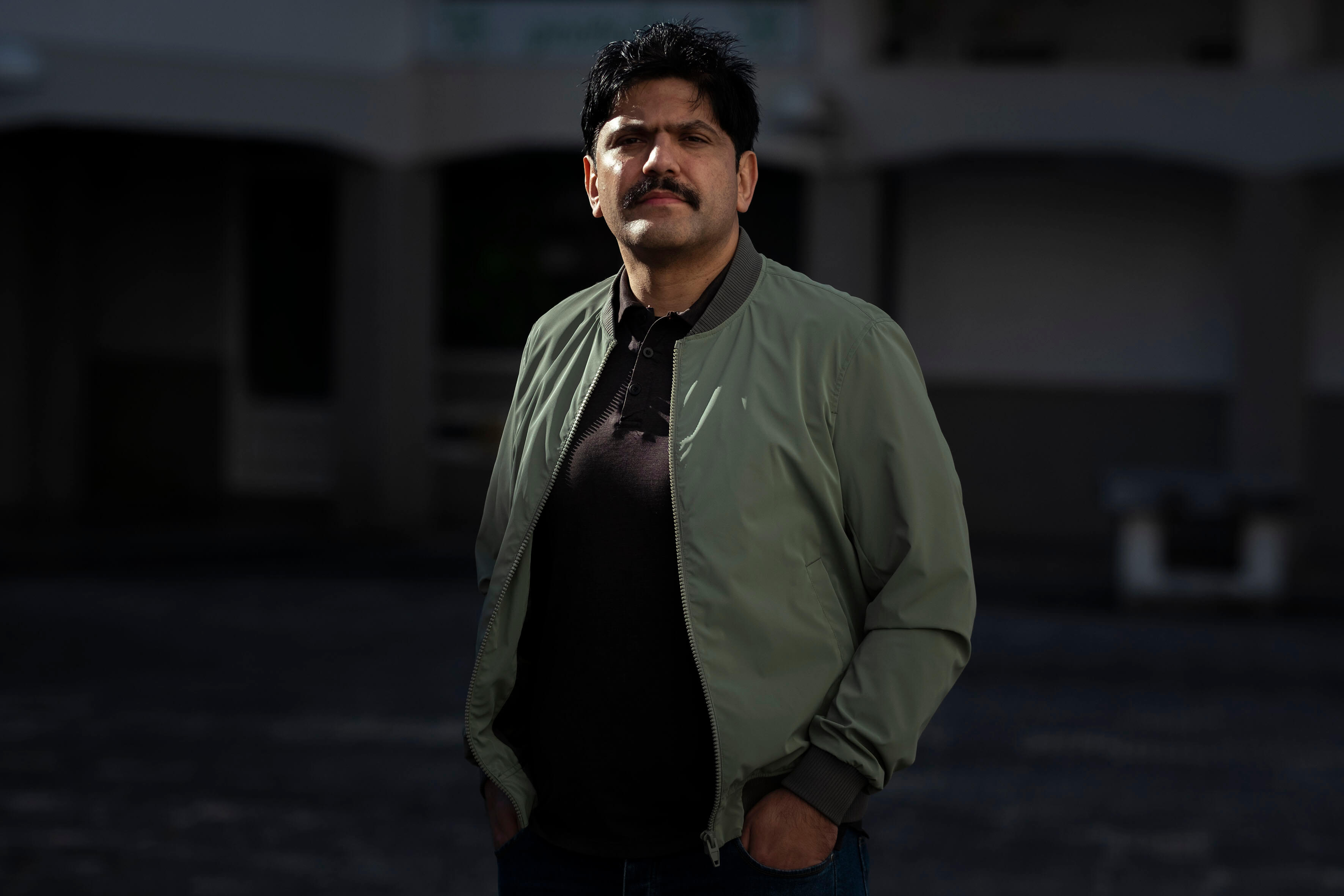
Photography: Tiago Bernardo Lopes
Tahir starts his day when most people are finishing theirs. After a 10-minute walk to the supermarket where he works the night shift, he spends hours restocking shelves and organizing inventory. Three years ago, however, Tahir's life was vastly different: first in Pakistan, and later in Oman and Dubai, he worked as a civil engineer[1]. Tahir is one of many highly qualified immigrants in Portugal whose skills and experience are underutilized—a phenomenon known as "brain waste".
About 27% of Portuguese professionals with higher education are overqualified for the jobs they perform, a number that rises to 39% among immigrants. An analysis by PÚBLICO — in partnership with Lighthouse Reports, El País, Financial Times, and Unbias the News — of data from the European Labour Force Survey (EU-LFS) reveals a clear disparity between professionals born in Portugal and those who came to the country for work. Brain waste disproportionately affects immigrants like Tahir.
Immigrants with university degrees but far from what they studied for
In Portugal, there is a 13-percentage-point gap between natives and immigrants working below their qualifications. This gap exists across most of Europe.
To ensure the population was always representative, some countries were grouped into a single category, such as the Visegrad Group (Czech Republic, Hungary, Poland, and Slovakia).
*Weighted average by the population of all EU members (excluding Germany), as well as Norway, Iceland, and Switzerland.
Portugal is not alone in facing the challenge of integrating skilled immigrants but stands out positively when compared to other Southern European countries. In Italy, the gap is about twice as high, and it is also significantly larger in Greece and Spain.
Portugal: Europe’s case for successful integration
When compared to other Southern European countries with similar economic profiles and migration patterns, Portugal has the lowest disparity (the aforementioned 13 p.p.). In Portugal, immigrants are substantially more likely to have higher education compared to native-born Portuguese.
However, the data suggest a system that relies on re-education as a way to have qualifications recognized, which requires financial resources to allow immigrants to spend time studying instead of working in their field.
A diploma made in Portugal seems to be a key factor for entering the job market especially to avoid working below qualifications or, worse, becoming unemployed. Among the countries analyzed, only Sweden surpasses Portugal in the disparity between unemployment rates among immigrants who studied at a local university and those with foreign degrees.
The likelihood of brain waste decreases with a degree made in Portugal.
When it comes to the overqualification of immigrants with degrees earned in Portugal versus abroad, the situation is even more extreme. Portugal shows the highest disparity in Europe, with a 35 percentage point difference between an immigrant with a Portuguese university degree and one with a foreign diploma.
Lusophone countries dominate foreign enrollments. France is the exception.
Data from the General Council for Education and Science (DGEEC) shows that about 12% of higher education students in Portugal are foreigners (excluding student exchange programs), mostly from Portuguese-speaking countries. While the absolute number of foreign students has increased over the years, their percentage relative to the total student population has slightly decreased as Portugal reaches record enrollment numbers in higher education.
In 2023, Portugal registered 51,088 foreign students, excluding exchange program participants — a number only surpassed by 2022, the highest to date.
The country has been adjusting legislation to facilitate foreign student access to higher education. The most significant step was the International Student Statute, introduced in 2014, which allowed institutions to create specific admission processes for international students and charge higher tuition fees — still within controlled limits. A special admission process for non-EU students was created. Since its introduction, this framework has been clarified and simplified, allowing, for example, the use of exams like Brazil's National High School Exam (ENEM) for admission.
The previous government also encouraged universities to increase the number of vacancies for foreign students. However, each university has its own set of admission requirements, deadlines, and documentation. These efforts were put in place to attract foreign students, in response to Portugal’s demographic challenges and the decline in the country’s youth population.
In fact, as of 2021, tuition fees from international students represented about €20 million annually for public higher education institutions (about 5% of their annual independent revenue).
One in four master's students studying in Portugal is foreign.
Relative proportion of foreign students in bachelor's, master's, and doctorate programs in Portugal
The proportion of foreign students relative to the total student population is consistently higher in doctoral and master’s programs than in bachelor’s degrees. Although bachelor’s programs have the lowest percentage of foreign students, they account for the largest share of the student population.
It is not possible to determine how many of these students already held a degree from a foreign university before enrolling in the Portuguese system.
Recognitions? What Recognitions?
Brain waste is not just about wasting talent — it erodes dignity, according to those who have experienced it. Tahir moved to Portugal hoping for a better future for his family. He thought moving to Europe would mean a higher quality of life, security, and good educational opportunities for his two young children. “We imagine Europe has a better future, but that hasn’t been my experience so far. I have no words… It’s been three years since I’ve seen my family, my wife, my children, my mother, and my father,” he laments.
Today, Tahir is lucky if he can save any money at the end of the month. He earns the national minimum wage, nearly half of which goes toward rent. Thousands of migrants across the country face similar situations. Although Tahir contributes monthly to social security, his process remains pending until he receives an appointment to obtain his residence card. Immigrants whose academic qualifications are wasted often work as administrative assistants and secretaries, cleaners in domestic and corporate settings, operational assistants, and sports professionals.
While waiting, he has no access to a family doctor, lacks a patient number, and cannot begin the process of recognizing his diploma. When he arrives home after his night shift at the supermarket, the day is already in full swing for his roommate as Tahir tries to get a few hours of sleep before heading to his Portuguese classes.
Data from the European Labour Force Survey (EU-LFS) analyzed by the journalist consortium show that immigrants without recognized qualifications are far more likely to work in jobs below their skills, be unemployed, or work fewer hours than they desire.
Recognized degrees have doubled in the last four years.
The significant role of a national diploma does not fully explain why some immigrants choose not to pursue diploma recognition and instead enroll in Portuguese universities. One explanation could be the lack of clear instructions on how this process should be carried out.
The recognition of foreign higher education degrees in Portugal was standardized in 2019, aiming to make it “more transparent, fair, and simple,” according to the Directorate-General for Higher Education (DGES). The legal framework introduced clearer definitions, included short-cycle higher education diplomas, and implemented streamlined procedures to reduce costs and response times.
The process also granted institutions autonomy to decide individual cases, as no centralized body oversees these procedures — immigrants must contact the institution where they seek recognition directly.
Manuel Heitor, former Minister of Science, Technology, and Higher Education, responsible for some of these changes, highlights the simplification and complete decentralization of the recognition process to higher education institutions. He notes, however, that while further simplifications are always possible, they cannot be achieved overnight and must involve “experts from the institutions themselves.”
There are three types of recognition: automatic recognition, applied to degrees considered equivalent to Portuguese diplomas, mainly from European countries; level recognition, which evaluates on a case-by-case basis whether a foreign diploma corresponds to a Portuguese degree; and specific recognition, involving a detailed analysis of the course's level, duration, and curriculum to verify if it matches a Portuguese degree in a specific area.
Since these changes were implemented, 26.826 diplomas have been recognized as of October 2023, with more than half being automatic recognitions.
Despite these efforts to simplify and streamline the process, immigrants often report difficulties navigating the recognition system.
Manuel Heitor disagrees with the idea that the country should be overly concerned about the issue. The former minister considers Portugal a “success story” in Europe regarding the reception and integration of immigrants, both in higher education and the labor market. He also underscores the country’s need to “improve the inclusion of immigrants further, ensuring their full integration with a fair and adequate transition to citizenship.”
On the ground, Tahir represents one of many cases where the state fails to respond promptly. “It’s been painful,” he admits. “When dignity is low, everything falls apart. We have lives, hopes, and dreams. I have a degree and a career I’d like to contribute to this country with. I don’t understand why this process can’t be easier.”
Brain Waste is an international investigation resulting from the collaboration between the following European media organizations:





The data cited in this work was obtained by Lighthouse Reports, an investigative journalism newsroom, which had exclusive access to microdata from the European Labor Force Survey, published by Eurostat. This data is normally only available to researchers and academics.
In addition to their own analysis and conclusions, they also collaborated with the data journalism teams of PÚBLICO, El País, The Financial Times and Unbias the News, who worked with the journalists of this team in analyzing and interpreting the data.
The complete methodology can be read at this link.
All numbers and visualizations mentioned in this work refer to data collected between 2017-2022, except for the United Kingdom, which only contributed to this survey until 2019.
For all indicators presented, the statistical significance of the difference between immigrants and natives was tested. In cases where the difference was not statistically significant, this information was not used.
Since some countries had small samples, it was decided to group some countries together, such as the Visegrad group, the Baltic countries, the Balkans and Bulgaria/Romania.
Data for Germany is not available in the original survey.
The following journalists contributed to this project:
Beatriz Ramalho da Silva, Eva Constantaras,
Justin Casimir Braun, Maud Jullien, Tessa Pang, Halima Salat Barre, Ella Hollowood, Alan Smith,
John Burn-Murdoch, Daniele Grasso, Borja Andrino, Emilio Sanches Hidalgo, Maria Martin Delgado,
Christina Lee, Justin Yarga, Gabriela Ramirez, Pablo Linde, Rui Barros, José Volta e Pinto, Ana
Maria Henriques, Joana Bourgard, Joana Gonçalves, Tiago Bernardo Lopes